Central for a first visit with relatively direct access to several major corridors. Exact hill position matters: a few blocks can materially change stroller or mobility friction.
Lisbon with a family
Plan the hills before they plan your day.
Lisbon can feel wonderfully compact on a map and surprisingly demanding on foot. The family-friendly version is built around a few strong zones—Belém, Baixa/Chiado, Alfama or Parque das Nações—without asking tired children, strollers or grandparents to climb between them all in one day.
Lisbon at a glance
- Where to stay
- Baixa / lower Chiado, Avenida / Marquês and Parque das Nações. Compare the areas
- How long
- Plan one area a day. There are 6 to choose from. See the areas
- Best ages
- Little ones: Parque das Nações. Older kids: Alfama + castle zone. Tips by age
- Rainy day
- Parque das Nações.
Choose for walking load, not just postcard appeal.
Useful for families who value wider streets, hotel choice and simpler transport connections over sleeping inside the oldest lanes.
Modern, flatter and strong for families prioritising the aquarium, waterfront space and lower-friction walking. The trade-off is distance from the historic centre.
Atmospheric and memorable, but steep, irregular surfaces and narrow lanes are a real daily constraint. Best when that character matters enough to justify the access trade-off.
Build Lisbon one terrain type at a time.
Belém
Belém works as a self-contained half or full day. Monument time can be broken up with waterfront walking, gardens and a food stop without climbing back into central Lisbon.
- Choose one major interior visit.
- Use open space as the recovery block.
- Verify current queues and ticket rules.
Parque das Nações
A high-value family cluster because a major indoor highlight can pair with broad waterfront promenades and open space.
- Make the Oceanário-scale visit the main highlight.
- Keep the rest flexible and nearby.
- Strong option for a lower-friction day.
Baixa + Chiado
Good for iconic city atmosphere, but crowds and gradients build quickly. Use cafés, squares and a planned transport assist instead of turning every hill into a walking challenge.
Alfama + castle zone
Treat this as a high-walking block. Older children may enjoy the maze-like streets and viewpoints; strollers and mobility-limited groups need a deliberate ascent/descent strategy.
Estrela + Campo de Ourique
A useful lower-pressure pairing when the family needs garden time, local food and fewer timed commitments.
Sintra decision
Sintra is not a quick Lisbon add-on. Treat it as a separate full-day logistics decision with transport, terrain and timed-entry checks of its own.
Lisbon changes with walking tolerance.
0–5
Favour flatter zones, one highlight and a real reset. A stroller can be helpful on promenades but burdensome on old-city stairs and steep cobbles, so route selection matters more than distance.
6–11
Mix one story-rich highlight with something kinetic: tram/funicular experience, aquarium, waterfront, park or viewpoint. Avoid making transport itself an exhausting queue.
12+
Give teens ownership of one food, viewpoint, street-art or neighbourhood block. Lisbon rewards wandering when the day is not already overloaded.
Multigenerational
Use flatter bases, taxis or accessible transit strategically. Do not assume the shortest map route is the easiest route.
Keep the terrain predictable.
One low-friction highlight → familiar lunch → park/waterfront/hotel reset → optional nearby evening.
One hill/old-city cluster → seated break → viewpoint or food choice → descent before fatigue peaks.
Outdoor old-city time early → indoor or shaded midday → waterfront/park later.
Use a major indoor highlight such as the aquarium or museum and keep transfers simple.
Accessibility has to be route-specific.
Lisbon Metro’s own guidance says passengers with reduced mobility should verify that origin and destination stations are fully accessible and check lift status. Do the same with a stroller if lifts are important to your route.
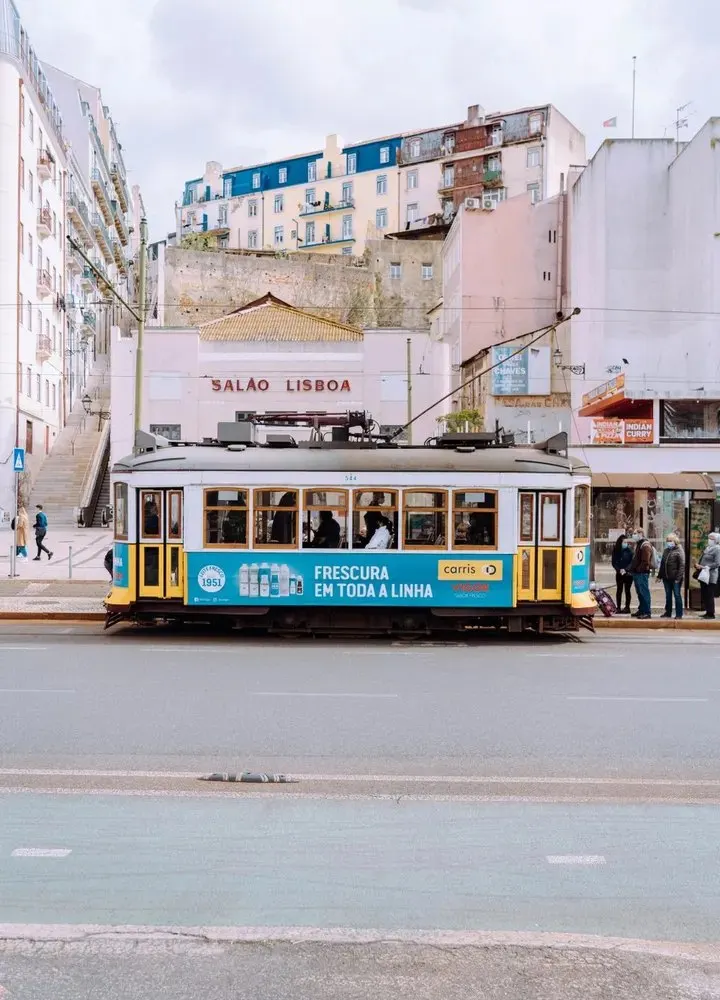
Do not build the whole day around boarding one famous tram. Crowding, queues and vehicle access can make a short ride a disproportionately large family task.
Belém and Parque das Nações provide open, lower-pressure space that can absorb snack, play and decompression time.
Before booking, inspect the actual walking route from the nearest useful transit stop to the hotel entrance.
Verify the volatile details.
Check these close to your trip:
- Current Metro lift/elevator status for the exact stations you will use.
- Tram, funicular and rail service changes or crowd-control arrangements.
- Timed-entry and queue conditions for major monuments and Sintra palaces.
- Current opening hours, prices and child admission rules.
- Heat, weather and any dated festivals or events that change crowd patterns.
Visit Lisboa official tourism ↗Lisbon Metro official information ↗Metro accessibility and family travel guidance ↗
World Beyond Home stores the durable geography and family trade-offs here; operational facts remain live checks.
Make it your trip
Build Lisbon around your family’s energy.
Give World Beyond Home the ages, walking tolerance, stroller or mobility needs, interests, dates and hotel priorities. The plan should spend family energy on Lisbon—not on avoidable hills and transfers.